Wildfire Defense & Defensible Space Services in San Bernardino County
Stop county fines before the 30-day deadline. Pass CAL FIRE inspection, satisfy your insurance, and defend your home — free estimates from vetted licensed contractors.
Get your free property assessment
Free • No obligation • Vetted local contractors
Why This Matters
Wildfires Don't Knock. They Take Everything in Minutes.
In a fast-moving wildfire, San Bernardino County families typically have 5 to 15 minutes to evacuate.
Not hours. Minutes. By the time you smell smoke, the choice has already been made for you — your home will either be defensible, or it won't. CAL FIRE and post-fire damage surveys are now clear that the work that decides outcomes is done long before the wind comes.
It already happened here.
The El Dorado Fire ignited at El Dorado Ranch Park near Yucaipa in September 2020 and burned 22,744 acres across Yucaipa, Mentone, Oak Glen, and the canyons leading into Forest Falls. It took crews more than five weeks to contain. One firefighter, Charles Morton, was killed. Dozens of homes and outbuildings were lost — many on parcels that had not been cleared in years.
Two months earlier, the Apple Fire burned 33,424 acres from Cherry Valley into the San Bernardino National Forest, pushing thousands of evacuations through the Calimesa and Yucaipa corridors and choking the Inland Empire with smoke for weeks.
Go back further — the Old Fire (2003) and the Grand Prix / Old Complex destroyed entire mountain neighborhoods above San Bernardino. Across this century, San Bernardino County has lost well over a thousand homes to wildfire. These are not abstract statistics. They are addresses, families, and decades of memories that no insurance check ever fully replaces.
And then there was the Palisades.
In January 2025, the Palisades Fire destroyed more than 6,800 structures in one of the wealthiest, best-resourced ZIP codes in the country. Multi-million-dollar homes burned to the foundation. The fire department was there. The hydrants ran dry. Wealth did not save those homes.
What did save homes — block after block, in CAL FIRE and IBHS post-fire surveys — was the boring work. Cleared Zone 0. Ember-resistant vents. Maintained landscaping. Trimmed-back trees. Houses that had been hardened survived next to neighbors that were ash. The pattern is now documented beyond debate: defensible space and home hardening are the single biggest factors in whether a structure survives a wildfire — ahead of fire-department response time, ahead of construction year, ahead of the wind.
This is why the codes exist.
PRC 4291 requires 100 feet of defensible space because forensic teams kept finding the same thing in the rubble: structures with proper Zone 0, Zone 1, and Zone 2 treatment survived at dramatically higher rates than the homes 50 feet away that did not.
AB 38 requires defensible space disclosure and inspection on home sales in fire zones because buyers and insurance carriers were quietly inheriting non-compliant properties they had no way to identify.
San Bernardino County Code Chapter 23 layers additional fuel-modification requirements on foothill and mountain parcels because the county has watched what happens when one neglected lot lets a fire jump into twenty compliant ones.
And insurance carriers — State Farm, Allstate, Farmers, and others — are non-renewing policies in fire zones because their actuarial models now price a non-compliant home as an uninsurable risk. Properties without documented mitigation drop to the California FAIR Plan at multiples of standard premiums, if they can get coverage at all.
The codes are not bureaucracy. They are the lessons the last fire taught us, written down so the next one takes fewer homes. Our job is simple: connect San Bernardino County homeowners with the licensed local contractors who do this work every day — so when the wind comes, your home is the one still standing. Read the full guides in our resource hub →
Compliance
What's the difference between CAL FIRE, county, and insurance compliance requirements?
Different authorities enforce different defensible space requirements in San Bernardino County. Knowing which type of notice or inspection you're dealing with determines your timeline, your obligations, and the consequences of inaction. Here's how the four main compliance scenarios compare.
| Type of Notice | Issued By | Authority | Typical Deadline | Consequences if Ignored |
|---|---|---|---|---|
| LE-100 Notice | CAL FIRE | California Public Resources Code 4291 | 30 days | Misdemeanor citation, fines, potential court action |
| Notice and Order to Abate | San Bernardino County Fire Hazard Abatement Program | County Code 23.0301–23.0319 | 30 days | $100 admin citation + late fees + lien fees + forced abatement at premium rates |
| Insurance Inspection Letter | Your insurance carrier | Carrier-specific requirements | Varies (often 30–60 days) | Policy non-renewal or cancellation |
| AB 38 Defensible Space Inspection | CAL FIRE / local fire authority | California Civil Code Section 1102.19 | Required at property sale | Cannot close escrow without compliance documentation |
Sources: California Public Resources Code 4291 · San Bernardino County Code 23.0301–23.0319 · California Civil Code §1102.19 (AB 38) · California Department of Insurance
For deeper guidance on each scenario, see our resources hub — including step-by-step guides for CAL FIRE notices and the AB 3074 Zone 0 rule.
Defensible Space Zones
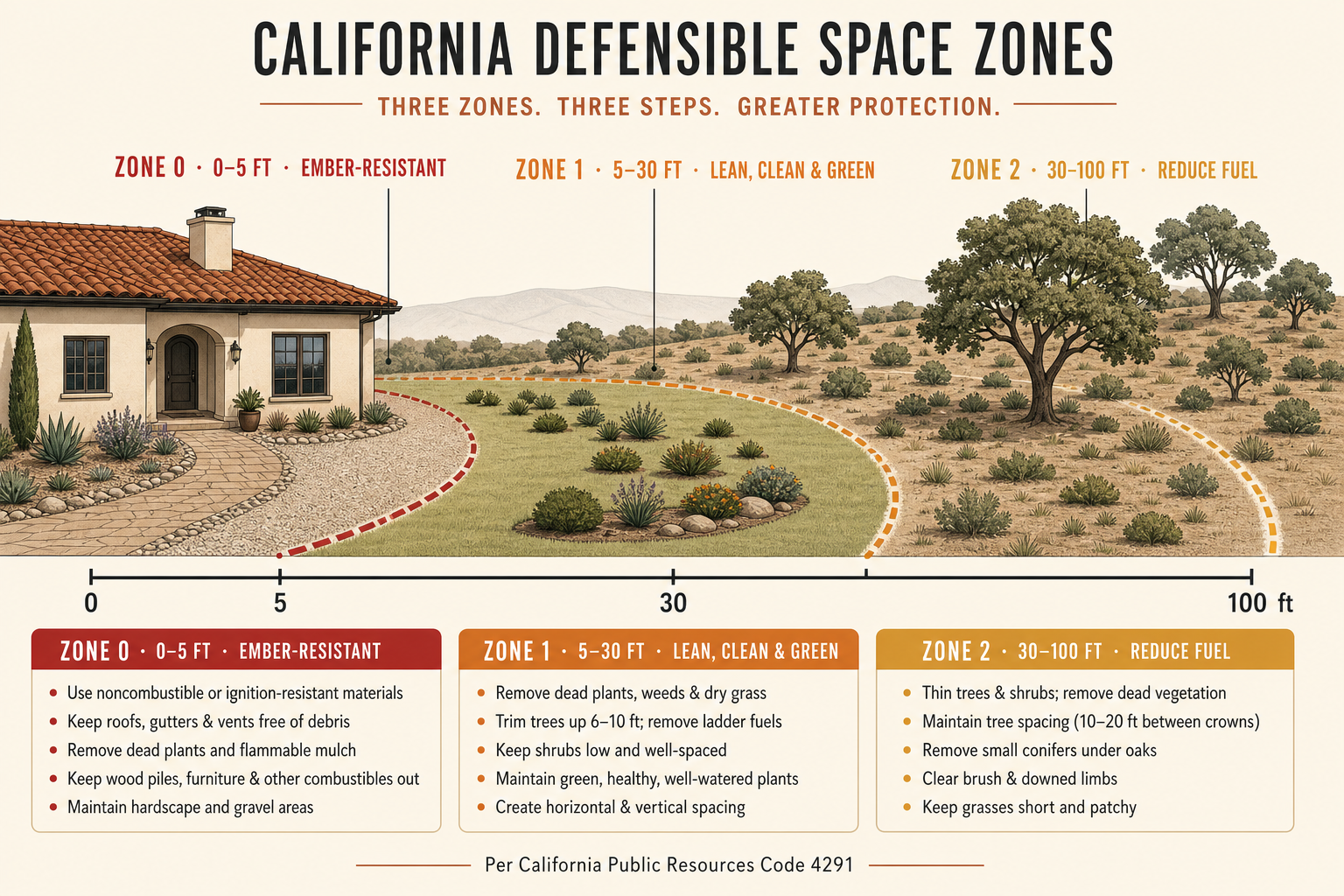
Zone 0, Zone 1, and Zone 2 — what California requires around your home
California Public Resources Code 4291 requires homeowners in fire hazard severity zones to maintain three concentric zones of defensible space around every habitable structure. Each zone has different vegetation, spacing, and material rules — and each plays a different role in stopping a wildfire from reaching the house.
Want a deeper walkthrough? Read our Defensible Space Inspection Checklist and our guide to AB 3074 Zone 0 requirements.
What We Do
Wildfire Defense Services Available in San Bernardino County
Defensible Space Clearing
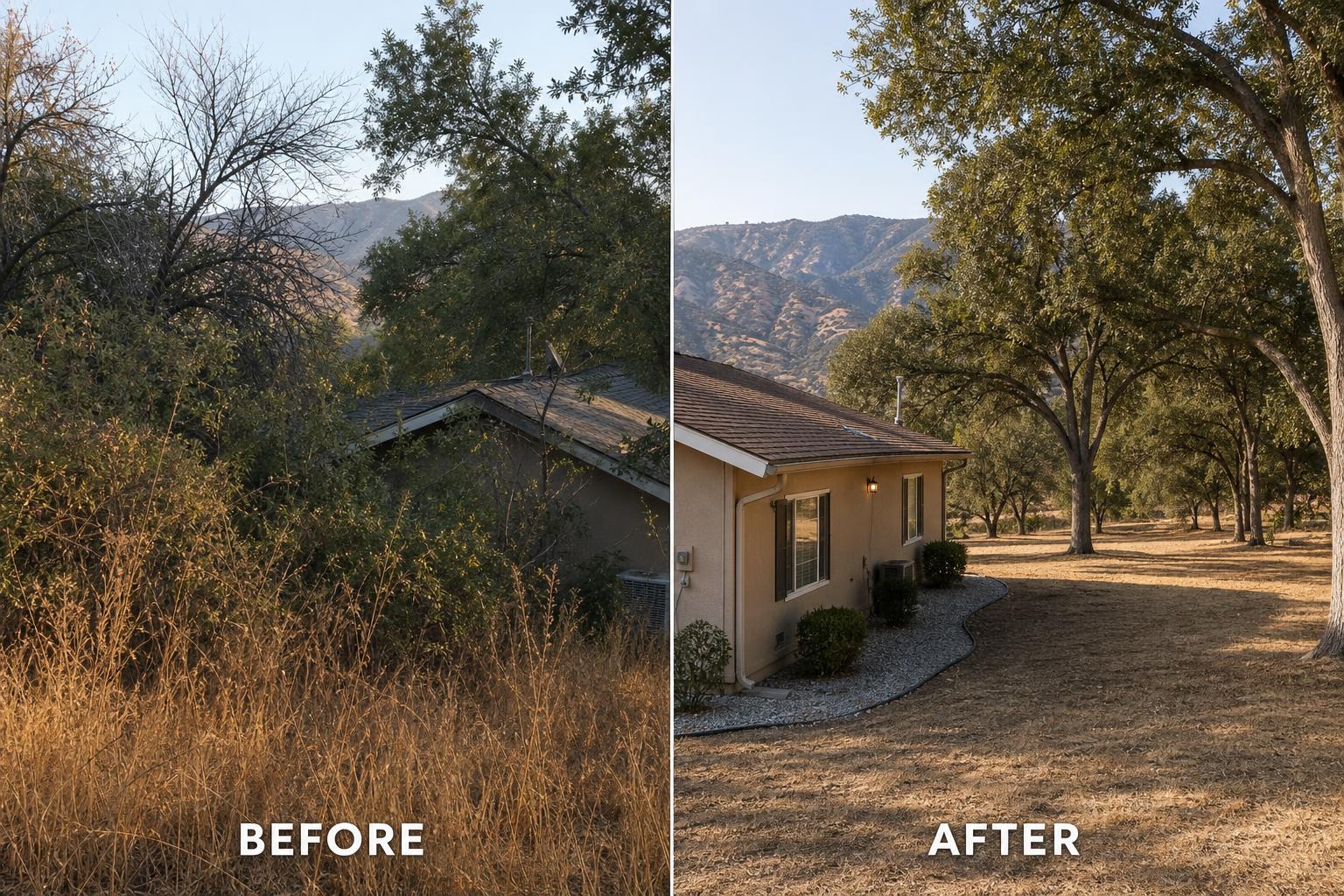
Comprehensive 100-foot zone management to meet California PRC 4291 requirements. Vegetation thinning, ladder fuel removal, and proper spacing per slope conditions.
Learn more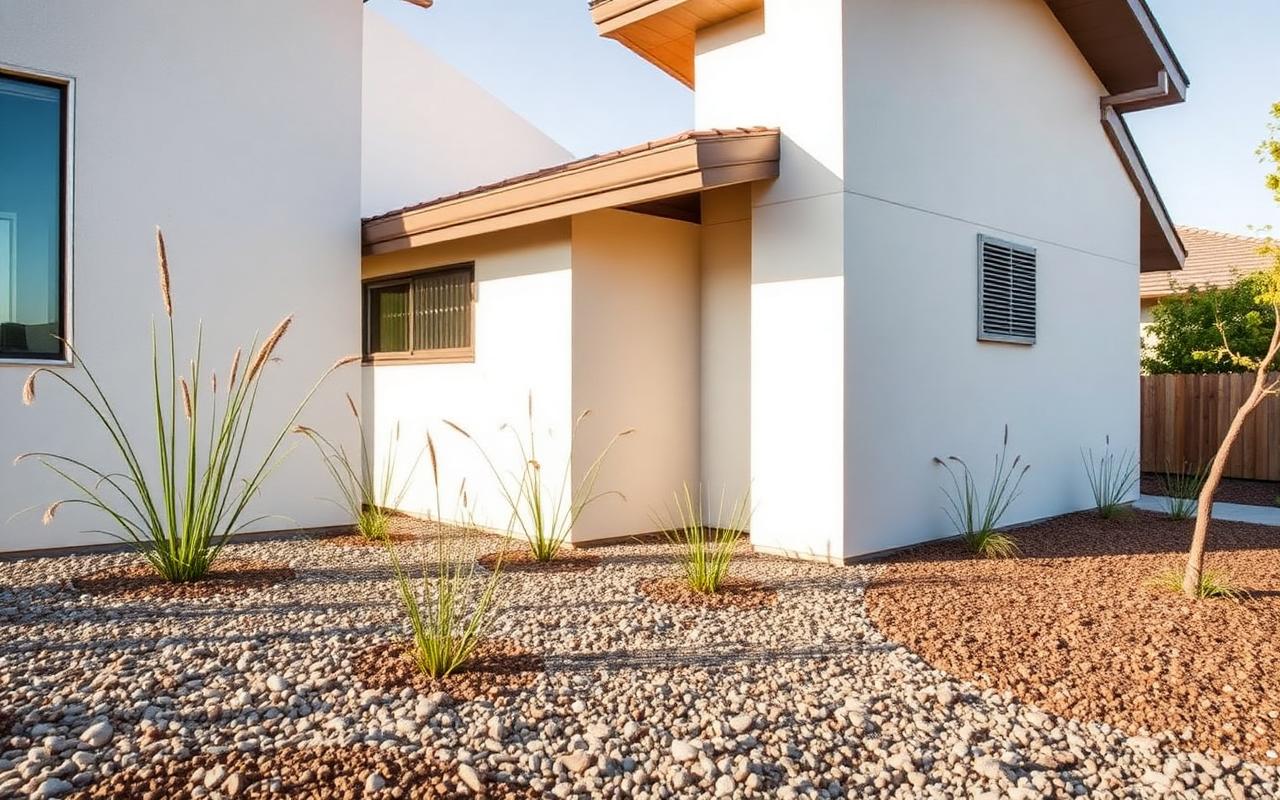
Zone 0 Compliance
Bringing the first 5 feet around structures into AB 3074 compliance ahead of 2027 enforcement. Combustible mulch removal, hardscape installation, and ember-resistant material upgrades.
Learn more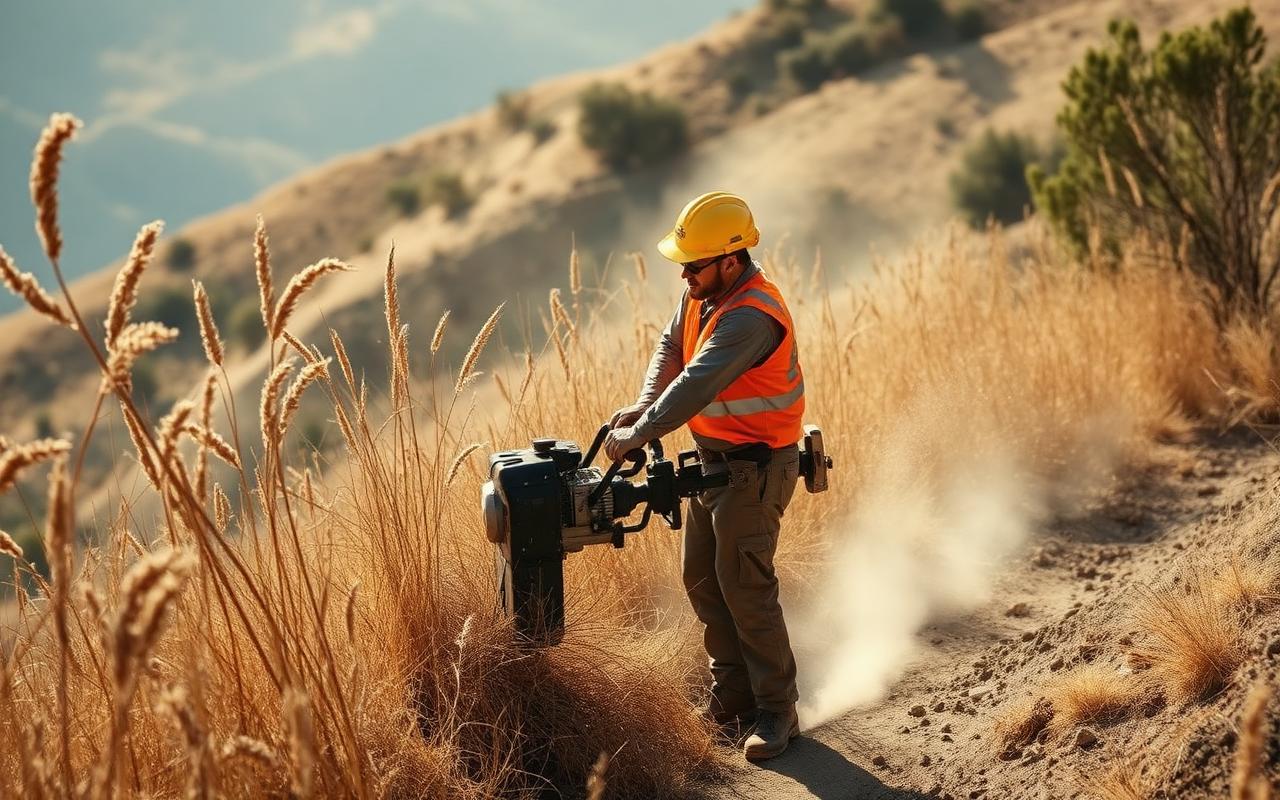
Brush Clearing & Weed Abatement
Seasonal vegetation management satisfying San Bernardino County Code 23.0301-23.0319. Cutting weeds and grasses to 4 inches or less, brush removal, and combustible debris hauling.
Learn more
Fire-Resistant Landscaping
Installation and design of fire-adapted landscaping in Zones 1 and 2. Fire-resistant plant selection, drought-tolerant species, and replacement of high-flammability plants.
Learn more
Property Fire Assessment
On-site walkthroughs to identify defensible space gaps, compliance issues, and mitigation priorities. Free contractor evaluations and insurance-compliant written assessments.
Learn more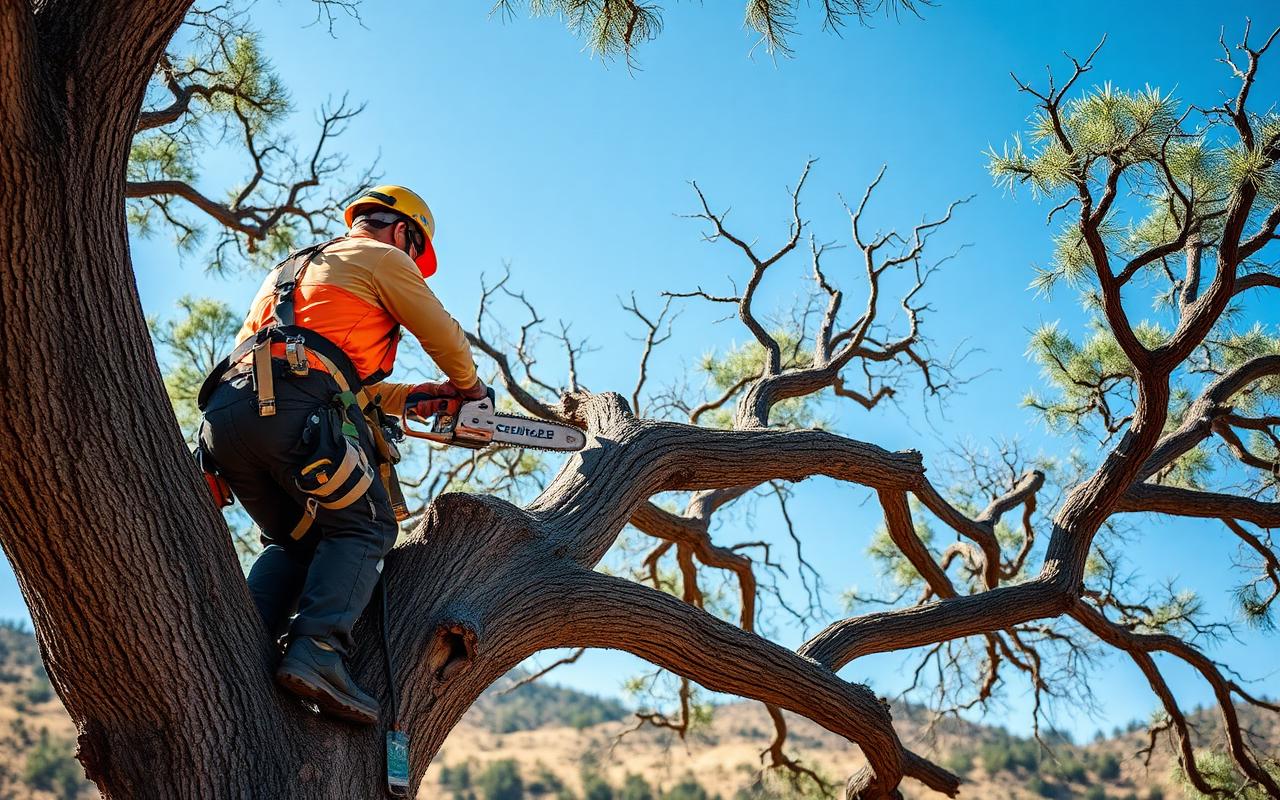
Tree Thinning & Limbing
Tree work specifically focused on wildfire risk reduction. Lower branch removal, canopy thinning for proper spacing, hazard tree removal, and dead branch clearing.
Learn more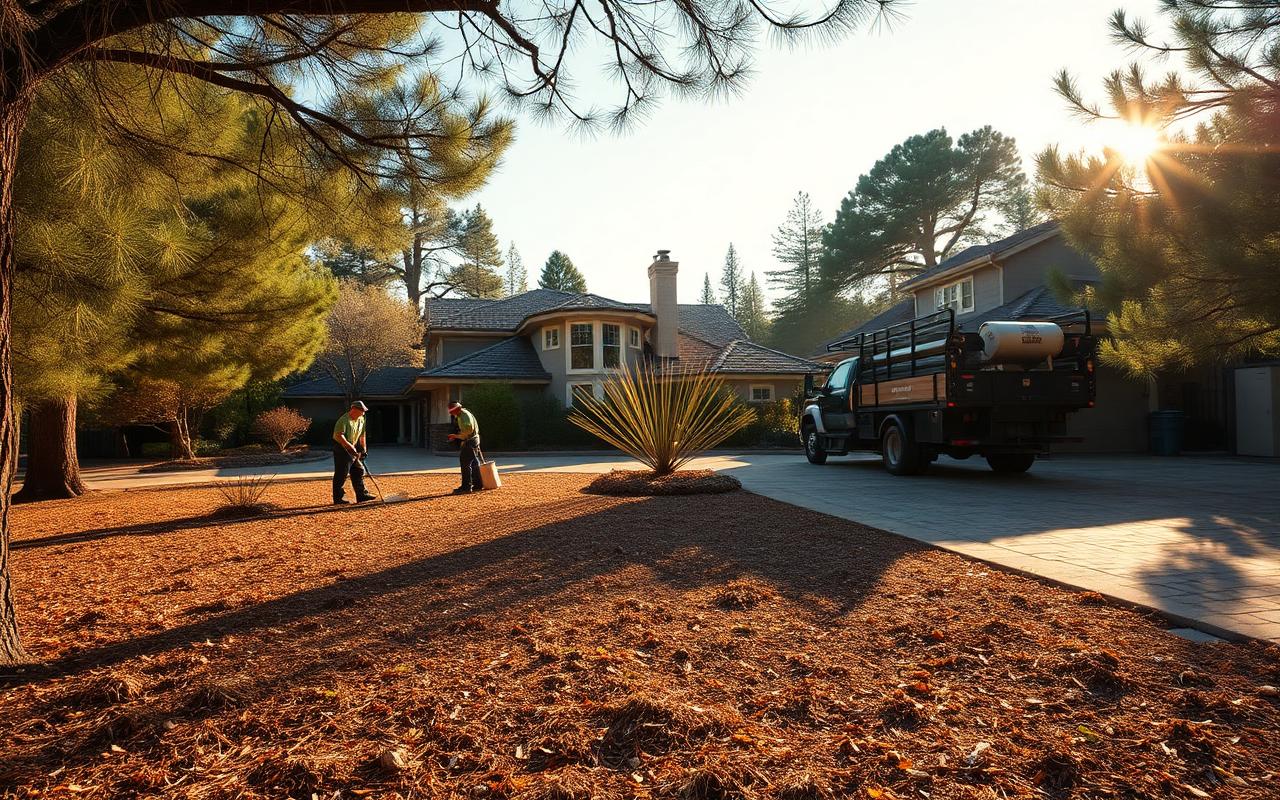
Annual Maintenance Programs
Recurring service contracts to keep properties continuously compliant. Scheduled vegetation management, ongoing debris removal, and pre-season inspections.
Learn moreNeed Help Now?
Specific situations we handle every day
Time-sensitive. Vetted contractors prioritize active notices.
Learn more →Carrier-ready documentation to support renewal or FAIR Plan exit.
Learn more →Get defensible space documented before close.
Learn more →Industry-standard pricing ranges for San Bernardino County.
Learn more →On-site walk-through with written estimate. No obligation.
Learn more →How It Works
How does the wildfire defense process work?
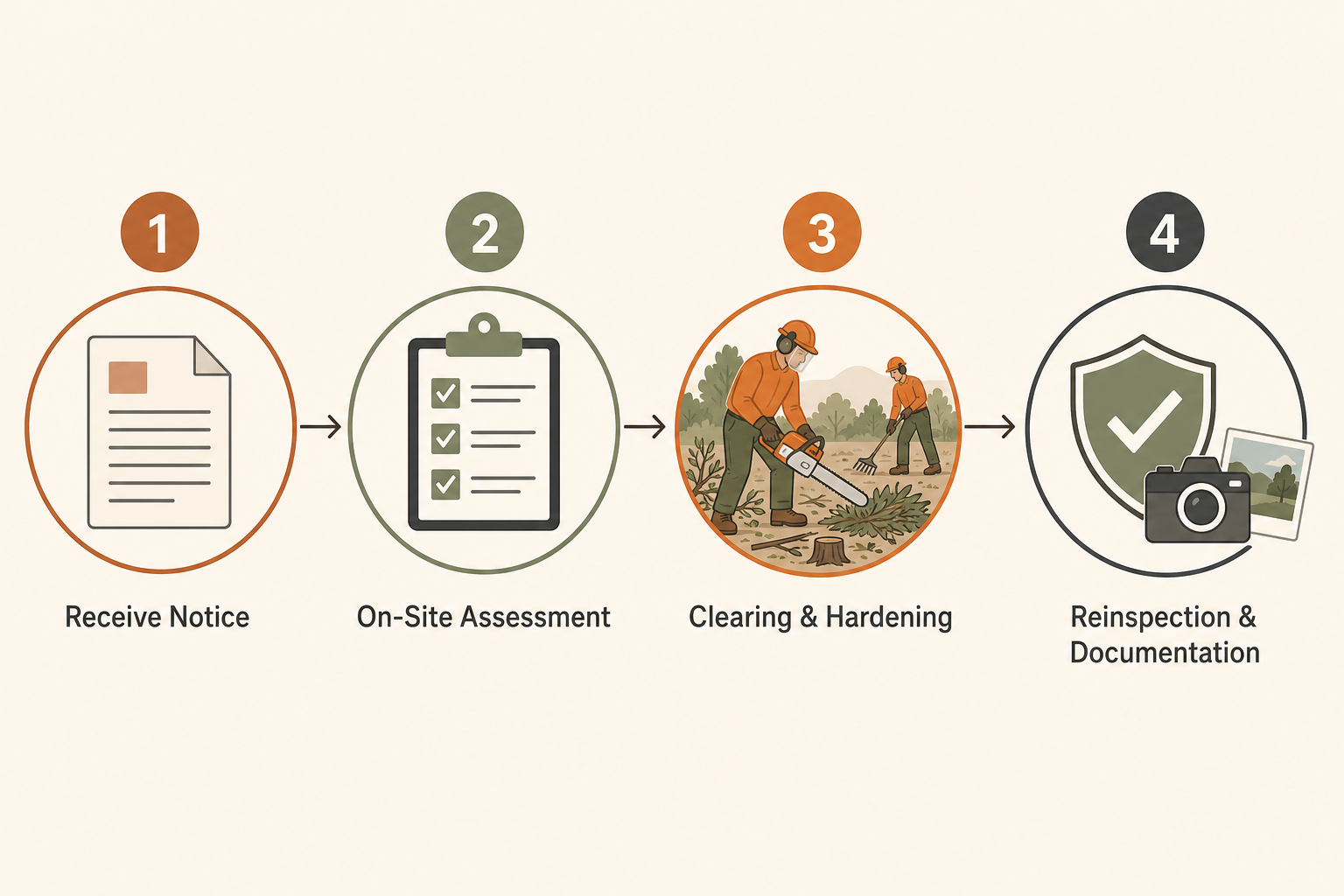
Free Consultation
Call or submit the form. Tell us about your property, your notice, or your insurance requirement.
On-Site Assessment
A vetted local contractor visits your property, identifies compliance gaps, and provides a detailed estimate.
Professional Service
Licensed contractors handle the work, hauling, and any required documentation.
Compliance Verification
Receive documentation suitable for CAL FIRE, county inspectors, and insurance carriers.
Service Areas
Where in San Bernardino County do we serve?
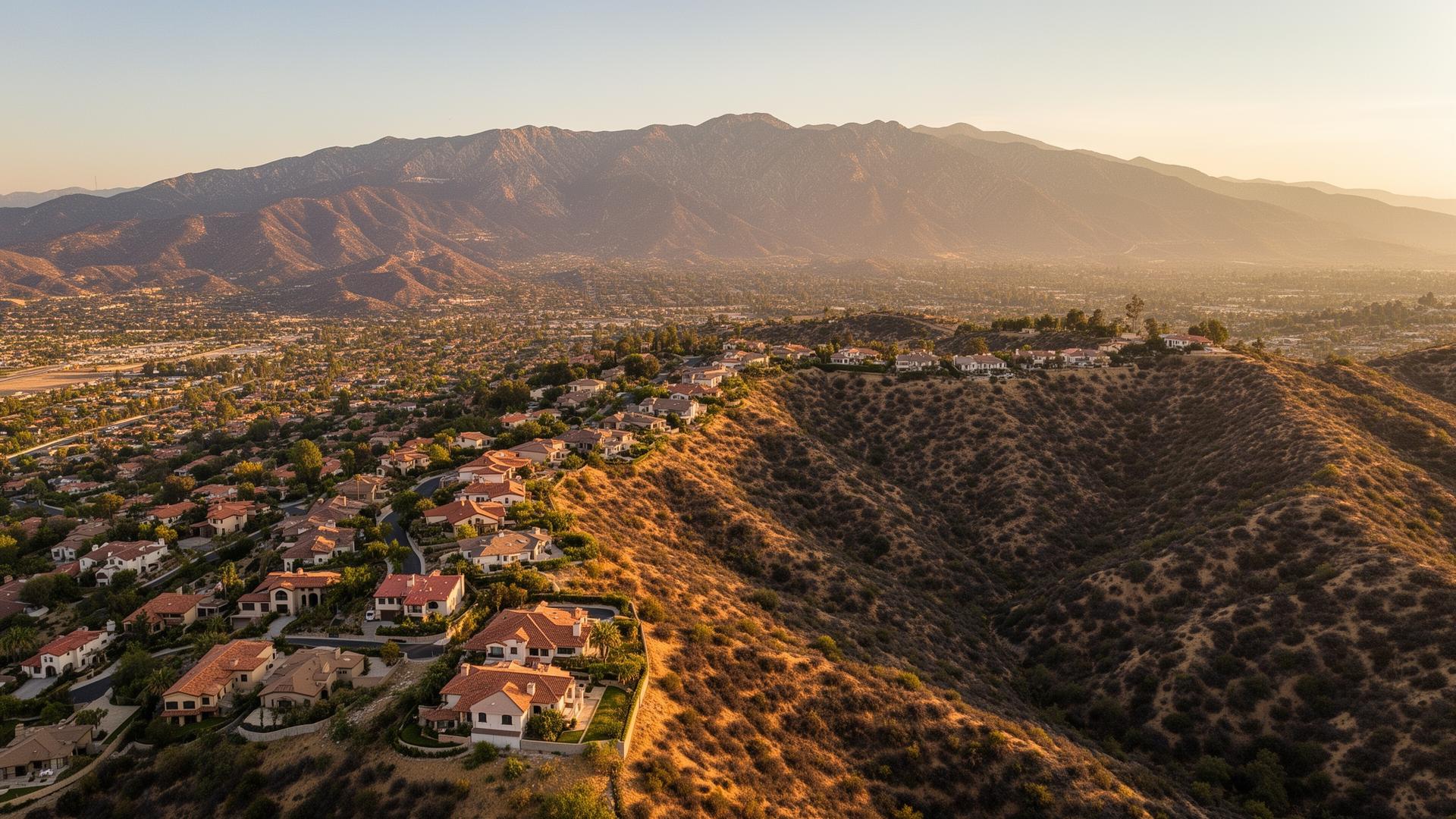
We connect homeowners across San Bernardino County's foothill and mountain communities — including Yucaipa, Mentone, Forest Falls, Calimesa, Highland, Redlands, San Bernardino, Rancho Cucamonga, and Chino Hills — with vetted licensed contractors. See the full service area list →
Yucaipa, CA
ZIP 92399
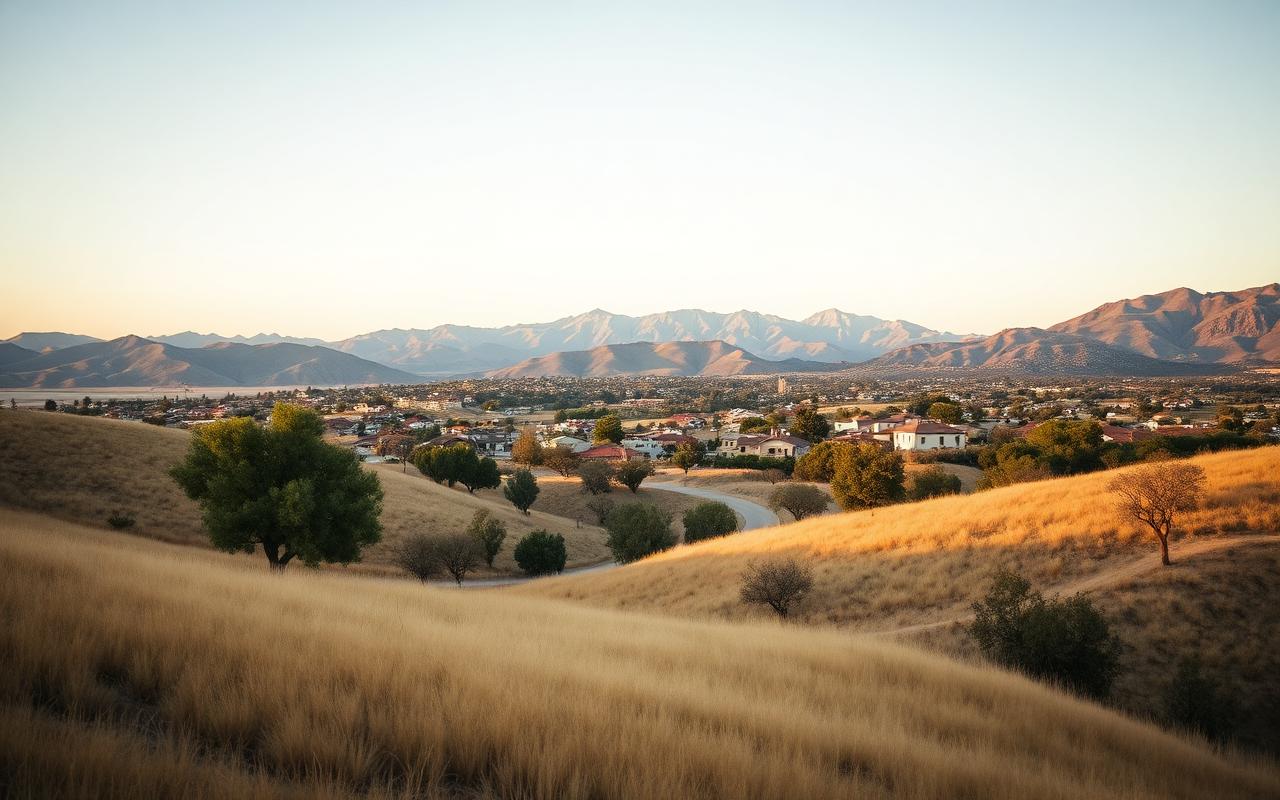
Foothill community at the base of the San Bernardino Mountains. The 2020 El Dorado Fire that killed firefighter Charles Morton burned heavily in this area. Properties throughout Yucaipa face high fire risk requiring annual defensible space compliance.
View Yucaipa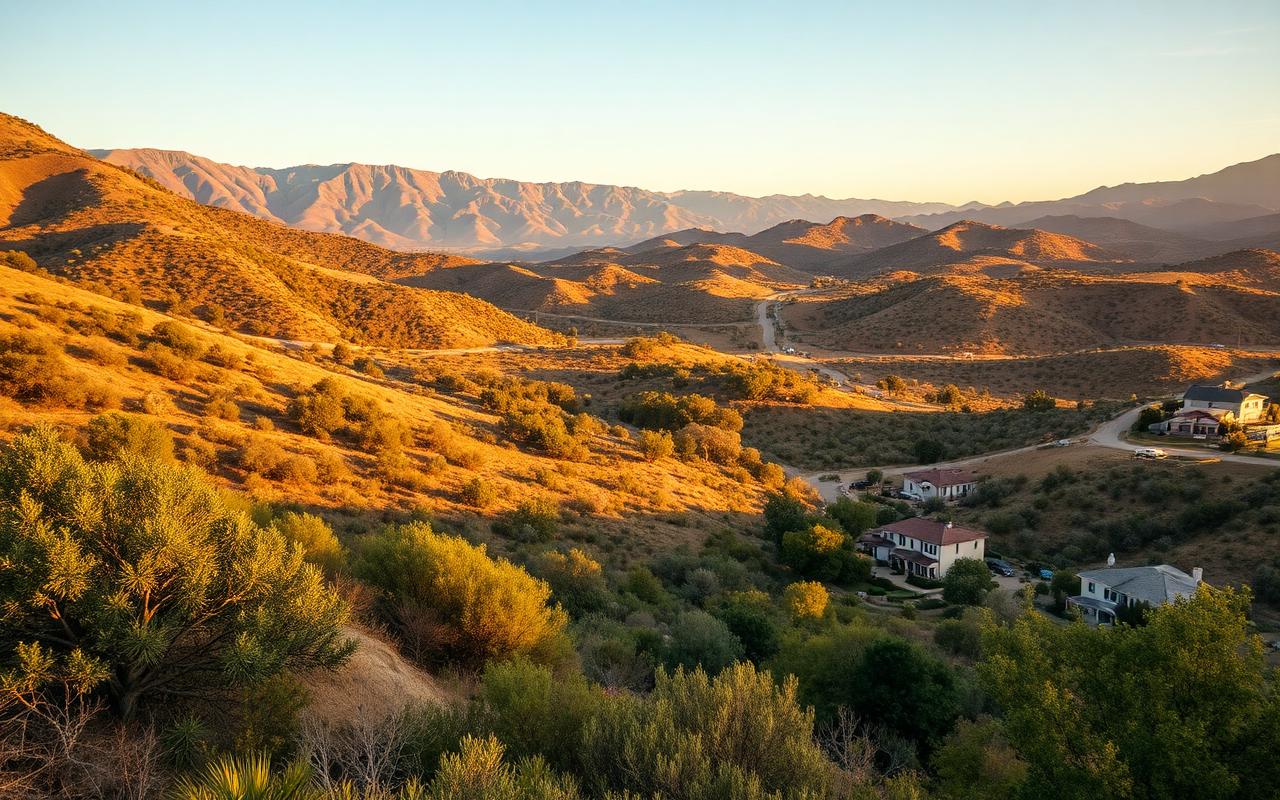
Mentone, CA
ZIP 92359
Unincorporated community between Yucaipa and Forest Falls along the San Bernardino National Forest boundary. Properties face significant wildfire exposure with mandatory defensible space requirements under PRC 4291 and County Code 23.0301-23.0319.
View Mentone
Forest Falls, CA
ZIP 92339
Mountain community within the San Bernardino National Forest. One of California's highest-risk wildfire zones. Properties face annual CAL FIRE inspections and the Mountain Rim Fire Safe Council offers subsidized compliance assistance.
View Forest Falls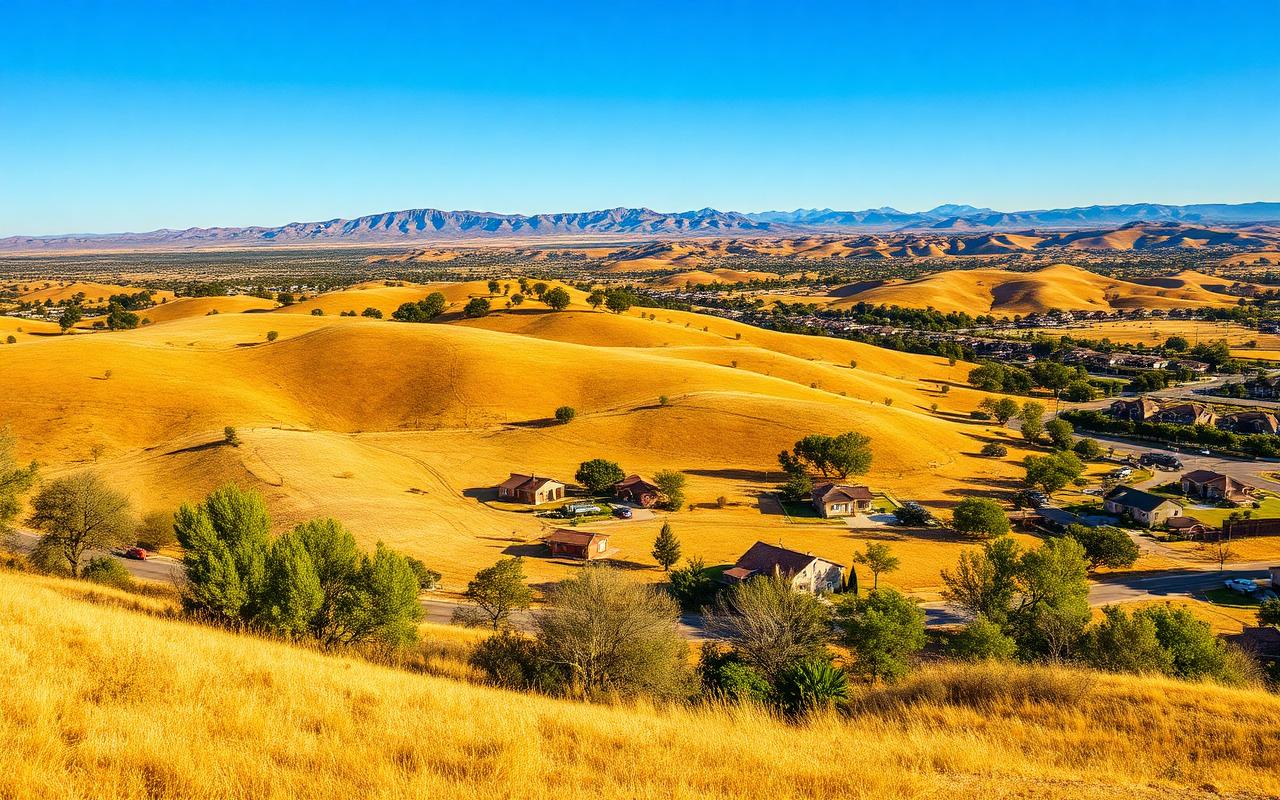
Calimesa, CA
ZIP 92320
Foothill community where the devastating 2019 Sandalwood Fire destroyed 76 structures and killed 2 residents. The fire's spread demonstrated the critical importance of defensible space compliance in this fire-prone area.
View Calimesa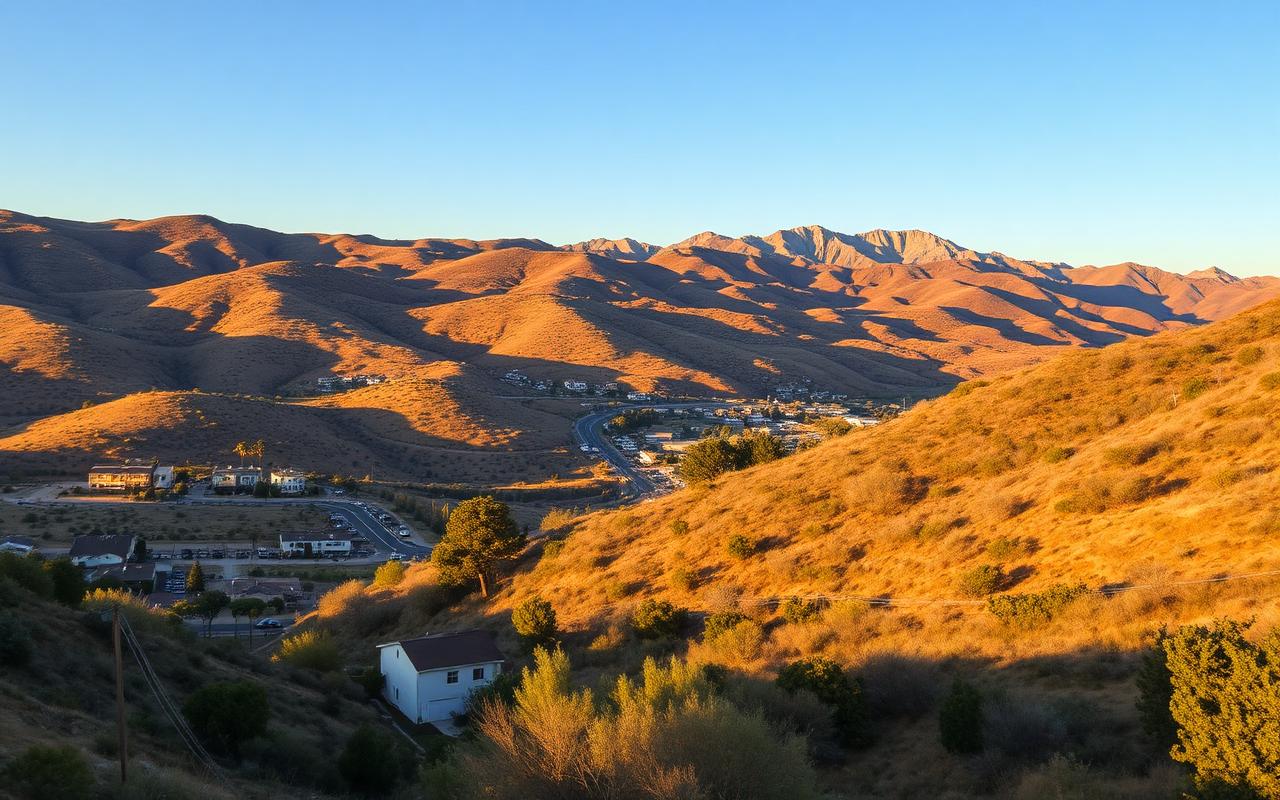
Highland, CA
ZIP 92346
Foothill neighborhoods at the base of the San Bernardino Mountains — East Highlands Ranch and the Greenspot corridor face direct VHFHSZ exposure.
View Highland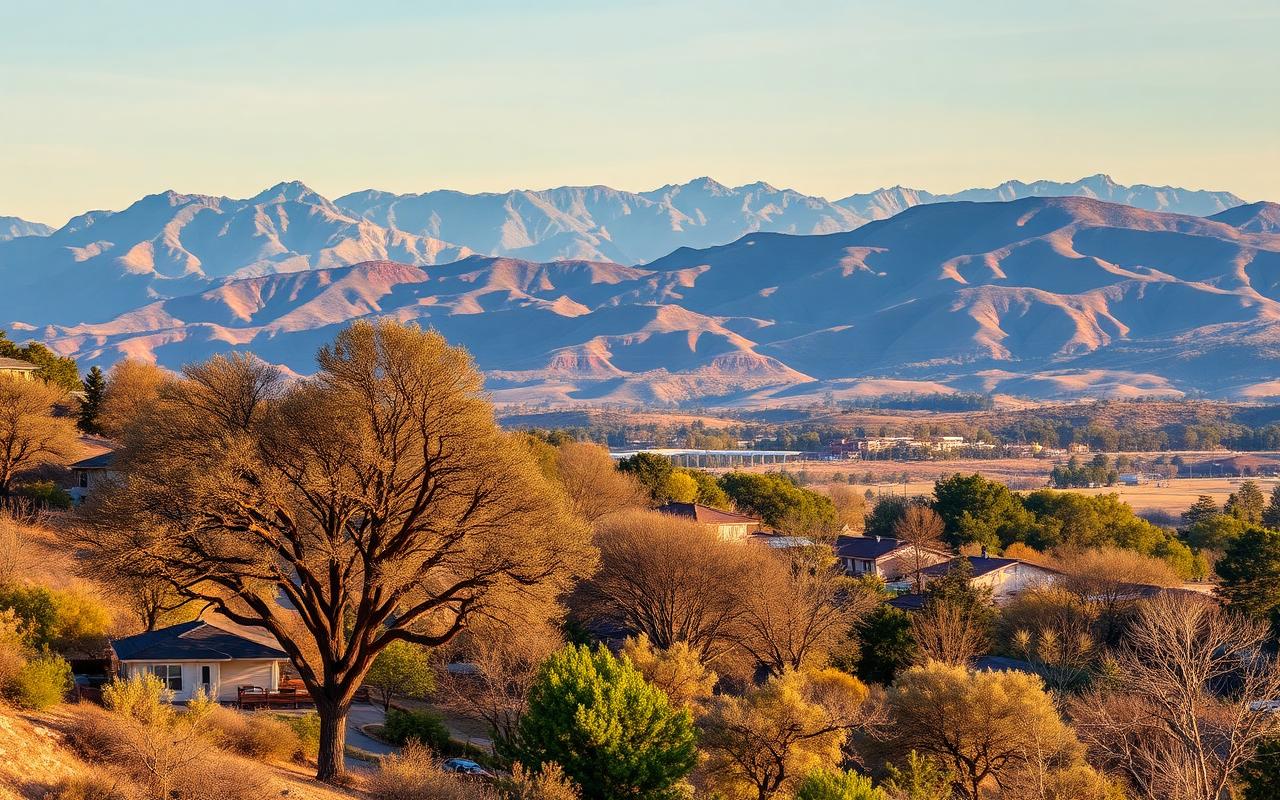
Redlands, CA
ZIP 92373
North Redlands and the Redlands Heights extend into chaparral foothills with Very High Fire Hazard Severity Zone designations.
View Redlands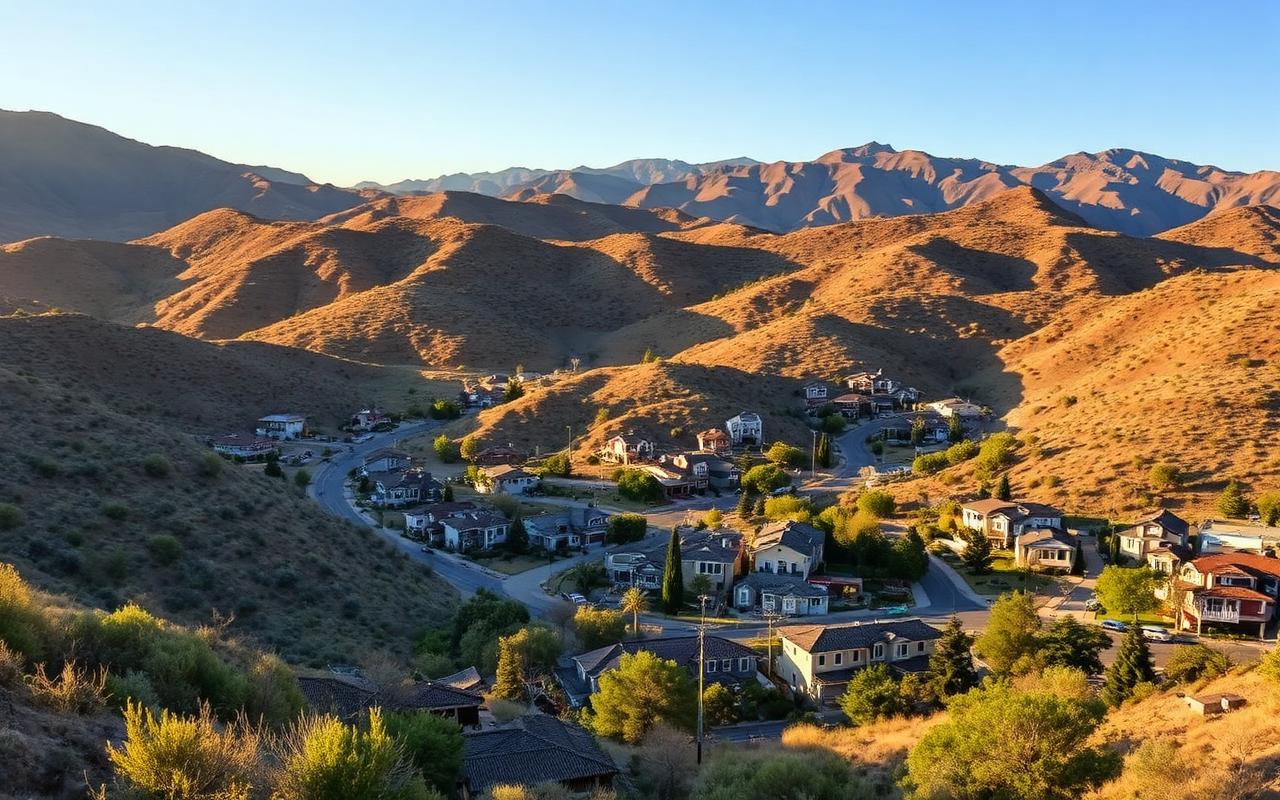
San Bernardino, CA
ZIP 92407
North foothill neighborhoods — Verdemont, Arrowhead Suburban, and the areas above Highway 30 — concentrated foothill fire risk.
View San Bernardino
Rancho Cucamonga, CA
ZIP 91737
Alta Loma and north Rancho Cucamonga sit at the base of the San Gabriel Mountains in significant Very High Fire Hazard Severity Zones.
View Rancho Cucamonga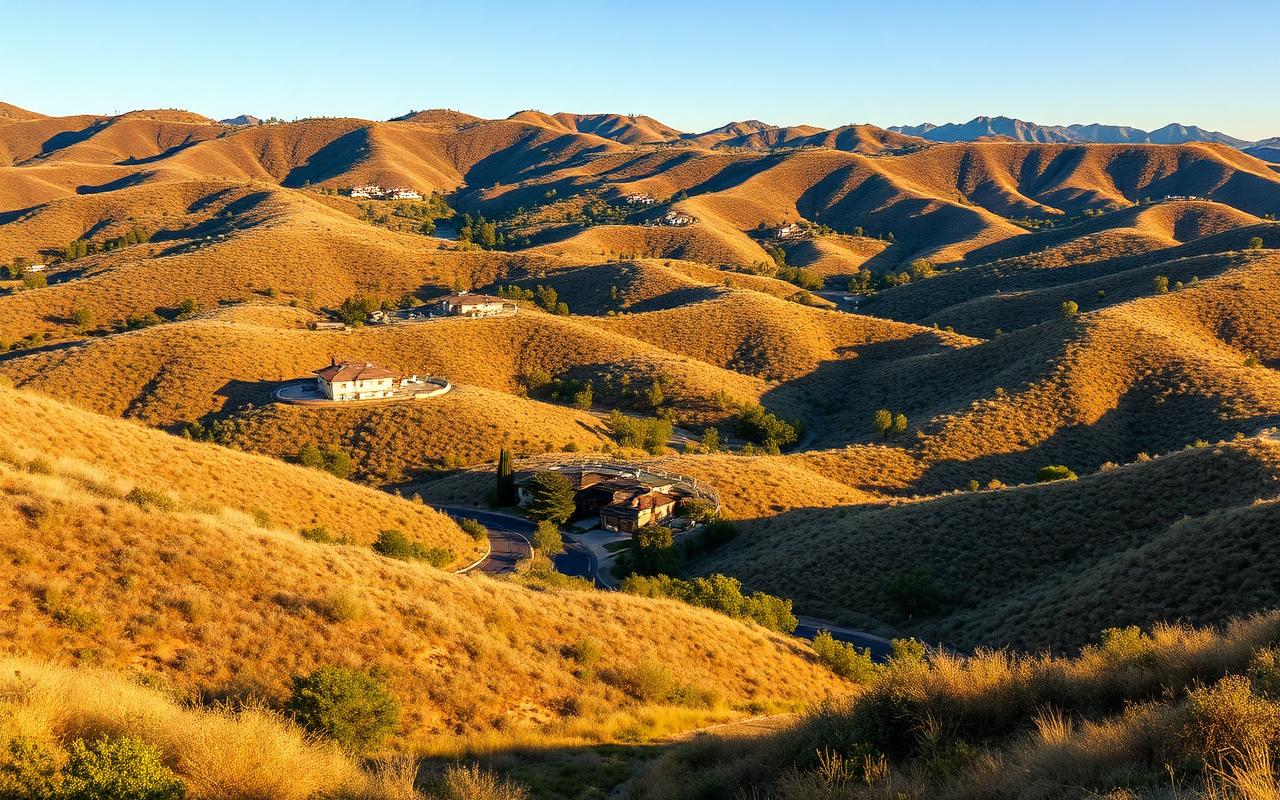
Chino Hills, CA
ZIP 91709
Built across rolling chaparral hillsides — much of Chino Hills sits in VHFHSZ with extensive wildland-urban interface.
View Chino HillsCommon Questions
Frequently Asked Questions
Costs vary based on property size, vegetation density, slope, and required scope. Industry-standard ranges: basic weed abatement on smaller lots typically runs from a few hundred to around fifteen hundred dollars. Full 100-foot defensible space treatment generally ranges into several thousand dollars depending on lot size. Premium fire hardening with Zone 0 work can range significantly higher for larger properties or extensive scope. On-site estimates from vetted contractors are free.
Zone 0 is the first 5 feet around your home — the ember-resistant zone with no combustibles. Zone 1 extends 5–30 feet with maintained, well-spaced vegetation. Zone 2 extends 30–100 feet with reduced fuel loads and proper spacing between vegetation. California law requires all three zones for properties in fire hazard severity zones.
CAL FIRE issues LE-100 notices when properties don't meet Public Resources Code 4291 standards. You typically have 30 days to comply. Submit the form or call to get connected with a vetted contractor who can assess your property, complete the required work, and provide documentation for your reinspection.
Yes. Insurance carrier requirements often exceed CAL FIRE minimums and vary by company. Vetted local contractors can assess your property against your specific carrier's requirements, complete the necessary work, and provide before-and-after documentation suitable for submission with your renewal.
Most residential properties take a few days, depending on lot size and vegetation density. Larger properties or comprehensive fire hardening projects may take longer. Properties with active CAL FIRE or county notices are typically prioritized.
Yes. Dead and dying trees are a major fire hazard and required to be removed under San Bernardino County Code. Removal, debris cleanup, and proper disposal can be included as part of the defensible space service scope.
Get Your Free Defensible Space Estimate
Wildfire season is here. Pass your inspection, satisfy your insurance carrier, and protect your home — call today or request a free on-site assessment.
San Bernardino Wildfire Defense connects San Bernardino County homeowners with vetted, licensed local wildfire mitigation contractors.